
On this lazy new year, I do a comparison between some of my old cheap meter (for Capacitance and Multimeter) and my new well know brand, Sanwa.
I finish some measurement for Capacitor and Resistor. It seems even the old cheap meter (cost <US$10) could measure very well compared with my expensive Sanwa (rated at 0.08% accuracy, cost >US$100). But for some special purpose, especially very small value measurement, the more expensive meter would do it better and more accurate. If you don’t mind with the “very standard” (more polite word for “cheap”) build quality, rarely measure small value item, and don’t need extra digit accuracy, then you can go with cheaper meter.
I compare 3 meters here. One is multipurpose meter, Sanwa PC510. High tech meter from Japan brand, Sanwa. Claims 0.08% accuracy, AC True RMS, and capable of testing Capacitance and Temperature (beside a standard AVO function of a Multimeter). This meter cost around US$ 150. The others are two my old meter. One is Heles UX35 (a standard AVO meter, cost around US$ 5) and the other is China brand Capacitance Meter CM8601A+ (up to 20.000uF, Capacitance meter only, cost less than US$ 8).
As the subject, I pick Audio Note Copper Foil Mylar-In-Oil Capacitor (default value at 0.47uF) and three value of 12W Mills Resistor (3R9, 22R, and 22K).
The photo below will speak by themselves.

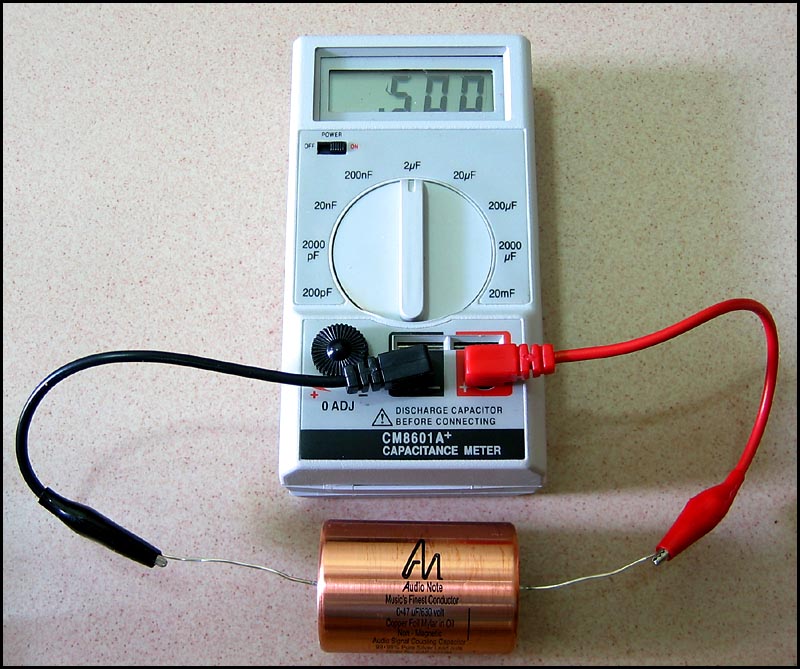
For the Capacitance testing, both meter show very similar result. I believe, 0.02uF different is less than 0.5% accuracy. Then we start with the 22R Mills.
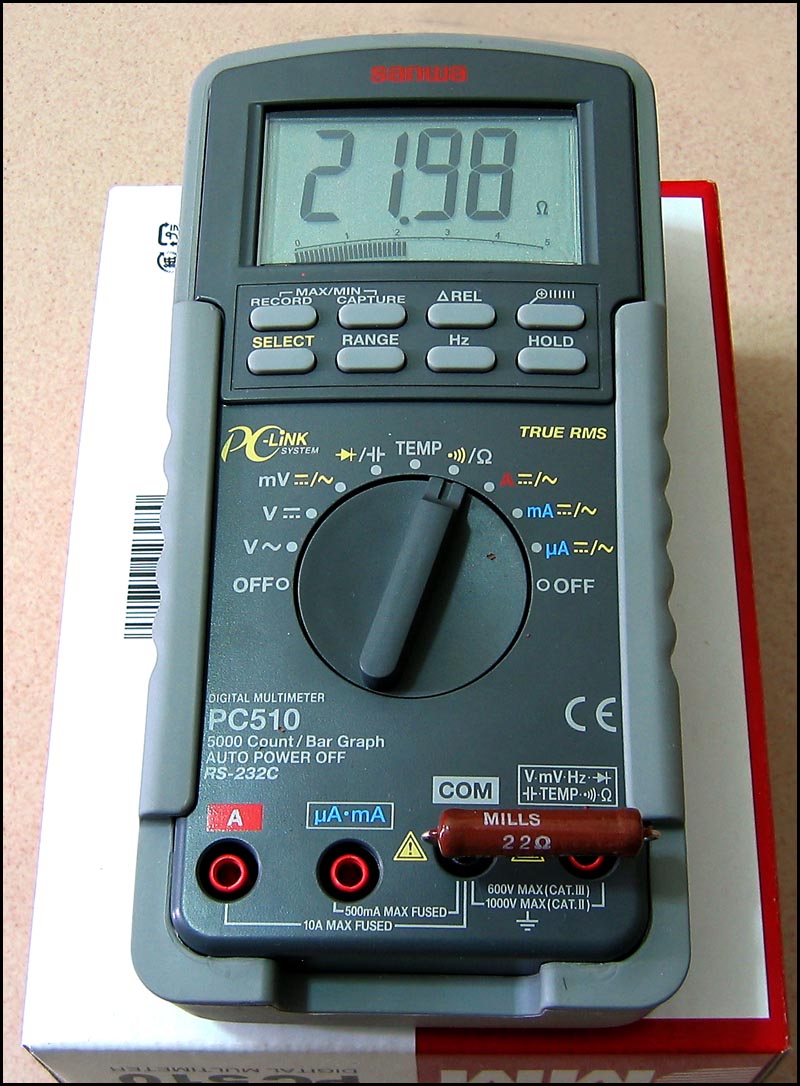

Now we see some different (21.98R at Sanwa and 22.6R at Heles). This is about 3% different. But do you really care about 3% accuracy? Since most parts like Capacitor or Resistor will have a standard tolerance of 5%. But if you do really a perfectionist 1% standard, then an expensive meter is a must.
Let’s go with an even lower value, 3R9 Mills.


The Sanwa produces exact 3R9 value, while the Heles around 4R1. Now we increase to 5% tolerance. It seems that the smaller the value measured, the more “function” of an expensive meter is shown up 😉
We go to a bigger value, 22K Mills.
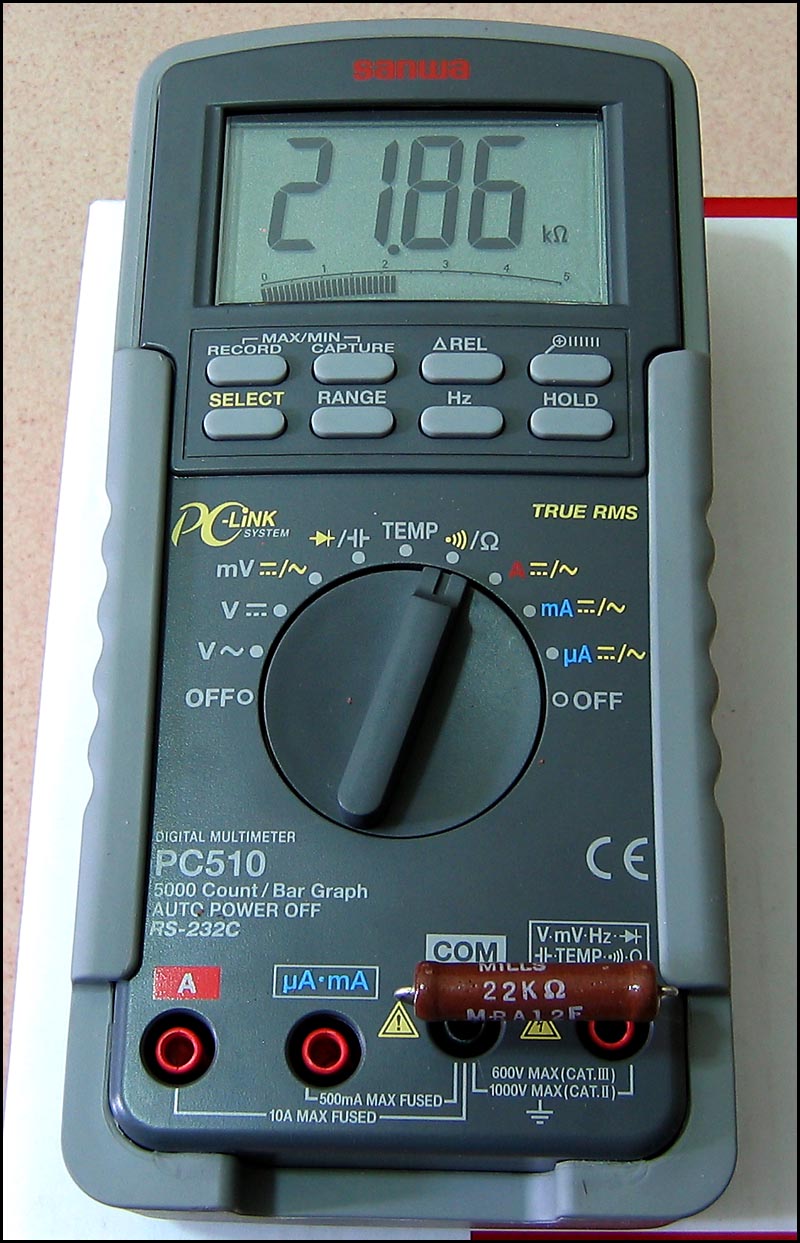
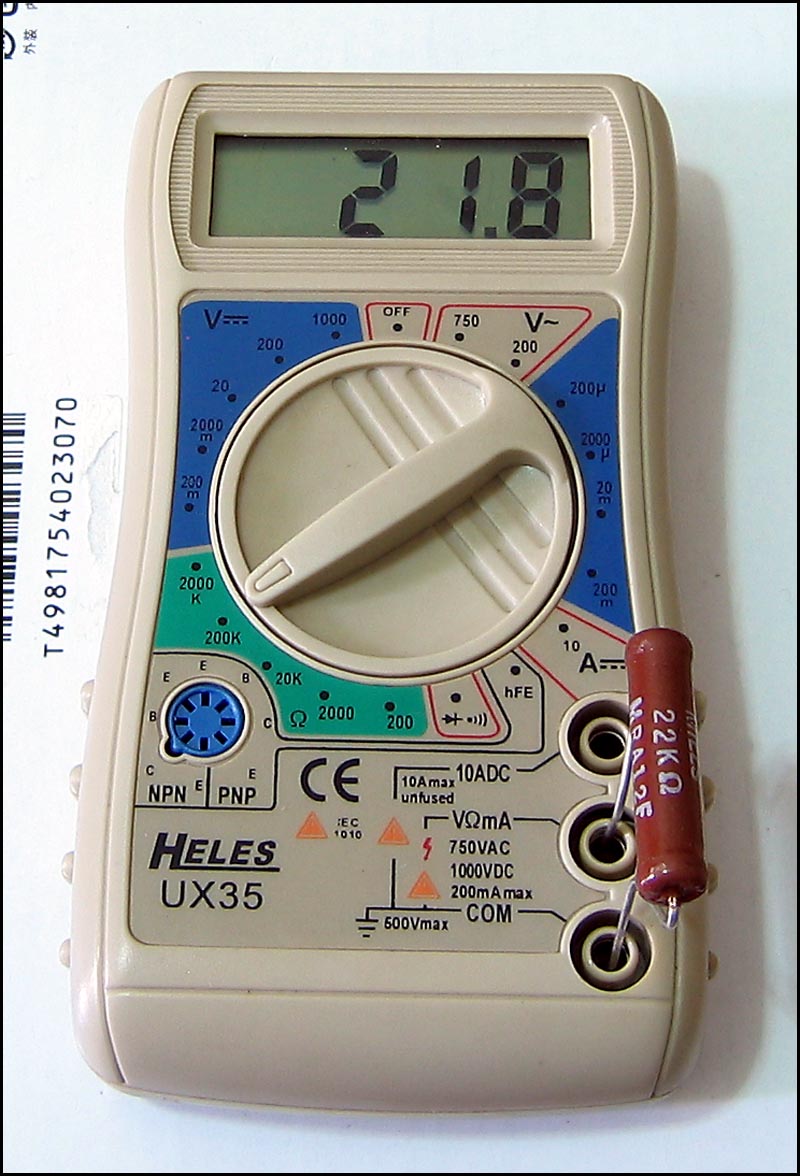
Both meter produces similar value, 21.86K (Sanwa) and 21.8K (Heles). With this high value measured (KiloOhm value), the different is less than 0.5%. If you are playing with KOhm value, I believe any meter is your best friend. No need to worry.
Well, although my old cheap meter could get most of the job done flawlessly, but I do love the new meter. The Sanwa PC510 has good build quality, good test probe, stable reading (5 times sampling/sec), extra bargraph (well I can dump my old Sanwa analog meter which still used to measure the good/bad Capacitor purpose), extra temperature/capacitance measurement function and also the ability to connect the meter to PC via Serial connection (special interface used to connect the meter to PC). The bad thing is, I must pay extra cost to get the cable and software.


aip
January 5, 2010 16:19nice post pak JA..
for me personally, using the “very standard” is ok lah.. just to ensure component for left channel and right channel are of very close values (the not “very standard” one is still desirable thou.. only when i have the tissue =)
good day pak!
Jimmy Auw
January 6, 2010 04:09Good morning Pak Aip. For left-right matching, I believe any meter will do.
Thanks.
glt
January 14, 2010 06:52What is the resistance for zero ohm? i.e. shorted leads. Some meters have an offset
Jimmy Auw
January 14, 2010 09:32The expensive meter (like this type of Sanwa) has Zero adjusment. So you can adjust, in case you will use different leads which have different resistance.
Thanks.
Yadi
March 23, 2010 11:43Kalau bajet 400rb dapet DMM yg kaya gimana pa.
Salam,
YADI
Jimmy Auw
March 23, 2010 21:24400rb bisa dapat Sanwa yang lumayan CD berapa gitu.
Thanks.
rizal
June 2, 2010 15:57OM JIM, sy punya 4 caps elco silmicII 220uF yg baru sy solder di PCB, sy test pake CM8601A+ yg 3pcs nilainya OK(masuk toleransi 5%), tapi yg 1pcs sy test kok hasil nya 183uF, artinya caps ini gmn pak??
rusak,dan perlu diganti ato msh OK tetap dipake pak??
thank u
Jimmy Auw
June 2, 2010 20:47Hi,
Nilai caps memang bisa geser. Kalo mau tau caps bagus atau jelek, minimal dicek pake Multimeter Analog untuk cek kebocorannya.
Thanks.
rizal
June 2, 2010 21:01Caranya gmn pak, utk tau capsnya bocor ga?
Thank u
Jimmy Auw
June 3, 2010 21:53Coba cari di Google, cara cek kapasitor bro. Biar lebih jelas.
Singkatnya sih arahin ke Ohm meter, lalu tes di kutub2nya (dituker2, merah ke positif-hitam ke negatif, lalu dibalik). Klao yang bener, abis swing, mesti balik lagi ke nol.
Thanks.
rizal
June 3, 2010 22:09Ohh ya bro… Udah dapet caranya…
Thx infonya om jim